 Login / Register
  Contact / wholesale enquiries



Summer camp is supposed to be the stuff of childhood legend. The smell of pine trees, the crackle of a bonfire, the marshmallow you’re not supposed to eat before dinner. It’s where kids test their limits, make lifelong friends, and come home sun-kissed and slightly feral in the best possible way. But for the estimated 6 to 8% of children in the UK living with a food allergy, many of them managing the risk of anaphylaxis, summer activities can tell a very different story. Not the story of freedom and adventure, but one of asterisks, exclusion, and constant surveillance. The child who can’t join the bake-off. Who watches from the side while everyone else toasts marshmallows. Who is loved and looked after, but also, inescapably, different. That is the story Julianne is familiar with firsthand.
Julianne’s camp story experience became a medical emergency.
Julianne was a child who loved the outdoors, adventure, and summer camp. But one summer, what should have been a highlight of her year became a terrifying medical emergency, when an anaphylactic reaction left her at the centre of everyone’s attention in the worst possible way. It wasn’t just the physical reality of the reaction – the throat tightening, adrenaline pen, anxious faces of counsellors who weren’t quite sure what to do. It was what came after – the watchfulness. The recalibration of every meal, activity, and shared moment, around what Julianne could and couldn’t have. The sensation of being cared for while simultaneously being made to feel like a problem to be managed. “You’re not just the child who had the reaction,” Julianne reflects. “You become the child everyone is watching.” That experience of love wrapped in anxiety and inclusion, with a hundred invisible caveats, resonates widely across the UK allergy community. And it is precisely why a growing movement in the US is asking a different question entirely: what if, instead of managing the allergy child around the camp, you built the camp around them?
What Allergy Summer Camps in the US Actually Look Like

Across the United States, a network of allergy-dedicated summer camps is changing what childhood can look like for kids with severe food allergies. They offer everything you’d want to experience at a regular camp – archery, white water rafting, swimming, bake-offs, campfires, and yes, marshmallows, all delivered in an environment where every single child can participate without negotiation.
Take Camp Blue Spruce in Oregon, which runs entirely free from the top nine allergens: dairy, eggs, peanuts, tree nuts, fish, shellfish, wheat, soy, gluten, and sesame. Their documentary film about the camp is called Tastes Like Freedom, and one camper put it simply: “I feel like I’ve been trapped in a cage and finally let out.” Or Camp TAG, run by the Food Allergy & Anaphylaxis Connection Team (FAACT), which operates across multiple US locations as a safe, joyful space for children with food allergies and eosinophilic disorders. At these camps, food is framed as the activity itself. Cooking and baking sessions are built into the programme and are open to every child. The marshmallow toasting around the fire is not preceded by a quiet conversation about what’s safe.
For many allergic children, it is often their first experience of that.
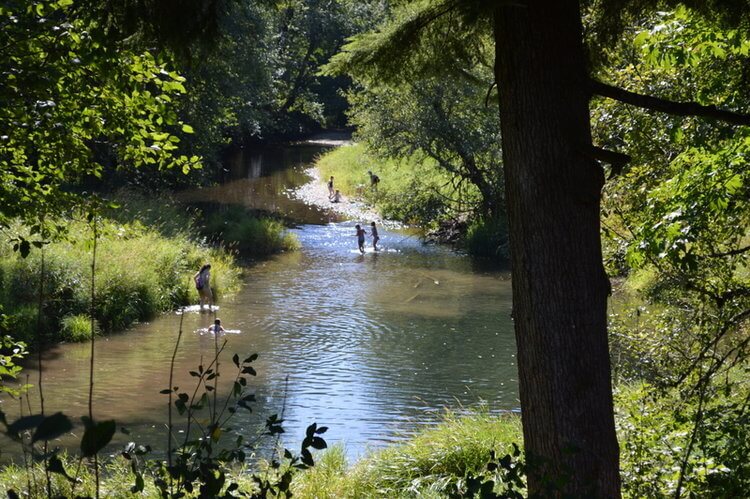
Being allowed to be.
The data on the emotional and psychological impact of food allergies on children is growing. A 2025 qualitative meta-synthesis published in Pediatric Allergy and Immunology found that children with food allergies live with daily fear, social restrictions, emotional stress, and peer exclusion. Research from Aston University, published in late 2024, found that the UK ranked among the countries with the highest rates of psychological distress related to food allergy, with anxiety about reactions and about trusting others the most commonly reported concerns for both children and their caregivers. None of this is surprising to families living it. The desire to be perceived as “normal” is one of the most consistently documented experiences of young people with food allergies. And what allergy-dedicated camps do, whether for a week or a summer, is hand that back. For a child who has spent years being the one who can’t join in, that is not a small thing. It is formative. It tells them something important about who they are and what they deserve.

What UK Parents Can Do Right Now
1. Prepare early for summer activities. Before any camp, club, or summer programme, send a written brief to organisers covering your child’s allergens, their emergency action plan, where the adrenaline pen is kept, and who is trained to use it. Don’t assume last year’s conversation carries over – staff change, and verbal agreements often don’t.
2. Ask the right questions. When enquiring about summer activities, ask specifically: Is the catering team briefed on cross-contamination? Are all staff (not just the nurse or lead, but also volunteers, minibus drivers, and activity leaders) trained in emergency response? Are menus reviewed against your child’s allergens before arrival?
3. Advocate for real inclusion, not managed exclusion. There is a real difference between a setting that accommodates your child and one that truly includes them. Accommodating might mean your child can attend, but still ends up watching from the side at the campfire. Including means the campfire works for everyone. It’s worth asking which setting is offering it.
4. Use the resources already available. The ABC Packs are a free educational resource co-developed with the Benedict Blythe Foundation, and are currently being piloted as part of the Department for Education’s national breakfast club rollout. They are a practical tool for raising awareness of allergies in school settings. If your child’s school hasn’t yet engaged with them, ask why not.
5. Connect with the allergy community. The UK allergy community is active, informed, and generous with its knowledge. Whether through parent forums, advocacy organisations like Allergy UK and the Natasha Allergy Research Foundation, or platforms like SkyRate, which allows families to peer-review airlines on allergy safety, connection with people who genuinely understand what you’re navigating makes a real difference.
Know a parent who needs to read this?
Share this post with someone navigating summer plans with an allergy child. And if you haven’t already, explore the Allergy Hero game – Creative Nature’s educational tool for school-age children that turns allergy awareness into an adventure, one that builds the confidence and knowledge every allergy child deserves.
Because every child deserves a summer where they get to do everything.
